Living On Borrowed Time
Wellness At Any Age

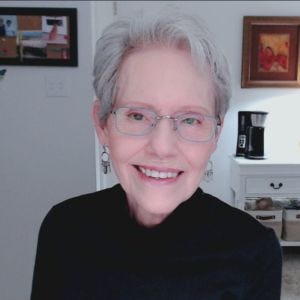
Thousands of people are diagnosed with cancer every year. Some of us die, but more and more of us live. Some of us live on borrowed time.
This is my story.
In April 2019, I was diagnosed with triple-negative breast cancer—an aggressive, fast-moving cancer that isn’t hormone-based. It’s sometimes called “the bad breast cancer,” as if any cancer could ever be “good.” Triple-negative breast cancer metastasizes rapidly, and once it spreads, it’s always fatal. Always.
At our first meeting, my oncologist was kind but direct. He promised to do everything possible during my treatment—but he didn’t promise that I would live. He explained that the treatments would be intense and frequent, and he didn’t promise there wouldn’t be crippling side effects.
A Fighting Chance
If diagnosed early, survival odds improve. In 2019, about 30% of Stage 1 patients lived beyond three years. Those odds were terrifying—but they were better than 0%. Thankfully, research continues to improve those numbers.
My tumor was Stage 1, caught during my annual breast screening. Like many women, I had gone in for a routine mammogram before work, expecting nothing. No one in my family had ever had breast cancer. A maternal uncle had pancreatic cancer in his 80s, but my family history was mostly heart disease, strokes, and kidney disease—not cancer.
Faith Over Fear
My daughter accompanied me to the appointment with the breast specialist. We both took DNA tests. On the way home, she commented that I seemed unusually calm.
She was right.
I wasn’t afraid. God is my rock and foundation. His peace settled over me, and I was in quiet wonder.
Treatment Begins
The next step was surgery. The tumor was removed, and no cancer cells were found in my lymph nodes. A relief—but I knew the battle wasn’t over.
Three weeks later, chemotherapy began. The summer and fall became a cycle:
Week 1: Chemo treatment.
Week 2: Debilitating illness.
Week 3: Feeling better—just in time for the next round.
After chemo, I began 30 days of radiation therapy—a daily two-hour round trip for treatment.
By November, all my treatments were finished. But I wasn’t the same. Exhaustion took over. My brain felt foggy. My body was weak. Winter passed in a blur.
Life After Treatment
My oncologist retired, and follow-up appointments felt pointless. I might have been dealing with depression, exhaustion, or both. Eventually, I stopped going to oncology and radiation check-ups altogether.
My “new normal” included neuropathy in both legs and feet—making stairs nearly impossible and walking unsteady. I used a three-point cane and needed help standing up.
Physical therapy was a game-changer, but a snowstorm meant I only made it to three sessions. Determined, I kept doing the exercises at home. Slowly, I saw progress. I could carefully walk up and down the basement stairs. It was slow, but I did it!
A New Path: Food as Medicine
Somewhere along the way, my daughter read a book by Dr. Michael Greger about nutrition. We talked, researched, and finally decided to become our own experiment.
We switched to a whole food plant-based diet—focusing on unprocessed vegetables, fruits, grains, beans, and legumes. We completely avoided processed sugars.
The results? I felt stronger. My mind was clearer. My energy returned.
Still Here, Still Thriving
I know I can’t prevent my cancer from metastasizing. I have no scientific proof that my diet has extended my life. But here I am—six years after a triple-negative diagnosis. I love the life I’m living, even with the ever-present thought of “borrowed time.”
God is good all the time. All the time, God is good.
An important journey beautifully told.
This is a powerful testimony, Nancy!